

Choosing the right exchange in 2025 has become more complex than ever. With regulatory crackdowns, security breaches, and the growing number of platforms, traders demand clarity before trusting their assets. That is why a comprehensive Gate.io exchange review is critical. As one of the longest-standing exchanges with a massive selection of coins and advanced tools, Gate.io has carved out a global presence. But is it still a good fit for the modern trader who balances security, affordability, and innovation?
Key Takeaways
- Founded in 2013, Gate.io is among the oldest operating exchanges.
- Offers access to 1,700+ cryptocurrencies, more than Binance or Coinbase.
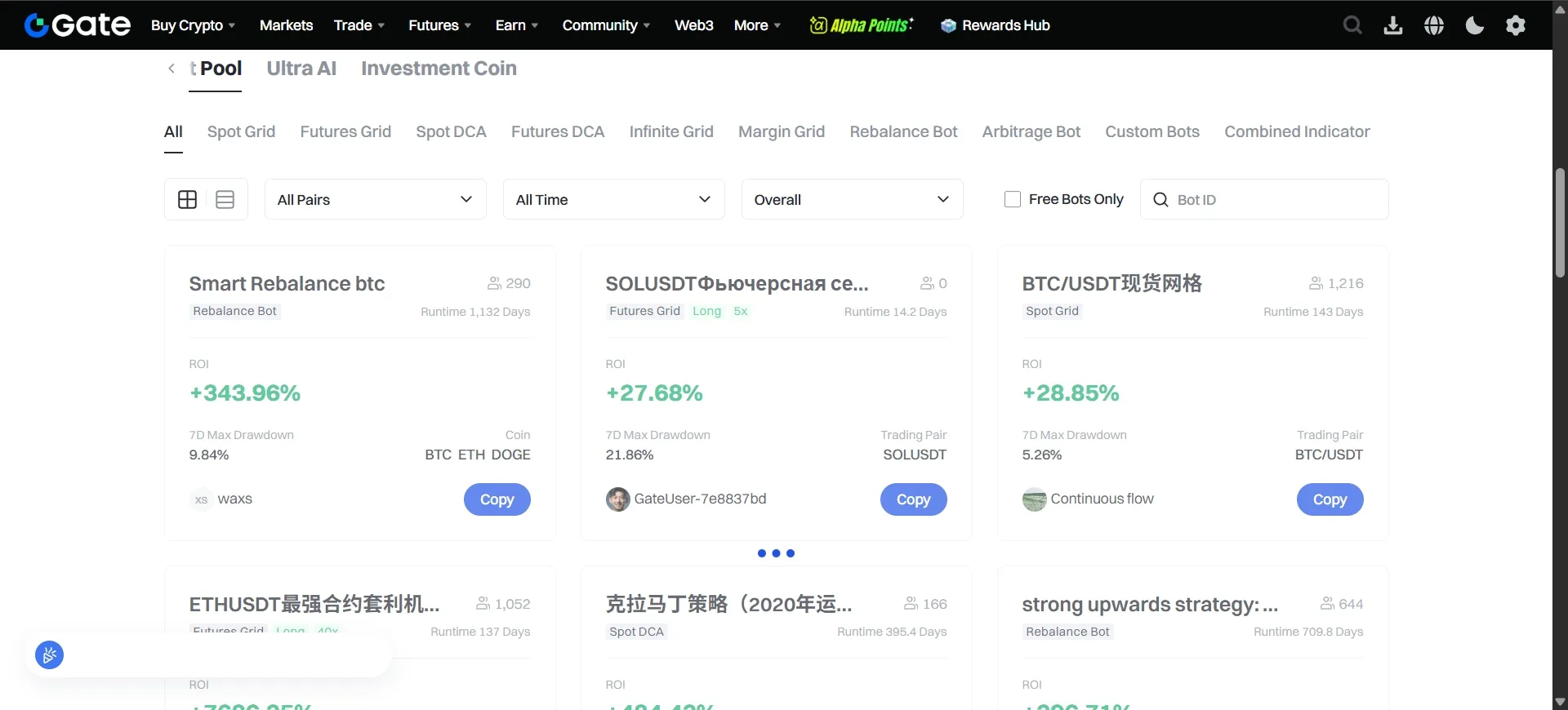
- Features include spot and futures trading, staking, NFTs, and copy trading.
- Fees start at 0.2% with discounts via GateToken (GT).
- Security practices are strong, but regulatory clarity is uneven.
Gate.io Exchange Review: Background and Growth
Gate.io started as Bter Exchange in 2013 and rebranded after China’s tightening crypto rules. Since then, it has expanded internationally and become one of the most recognized names in the altcoin space.
Unlike platforms that only offer mainstream coins, Gate.io quickly differentiated itself by listing smaller, emerging tokens. Over time, it also developed a broader ecosystem with GateChain, its own blockchain network, and GateToken, a utility token providing fee discounts and governance participation.
Therefore, Gate.io stands out not just as an exchange but as a full-service crypto hub that bridges centralized and decentralized services.
Pricing and Market Positioning
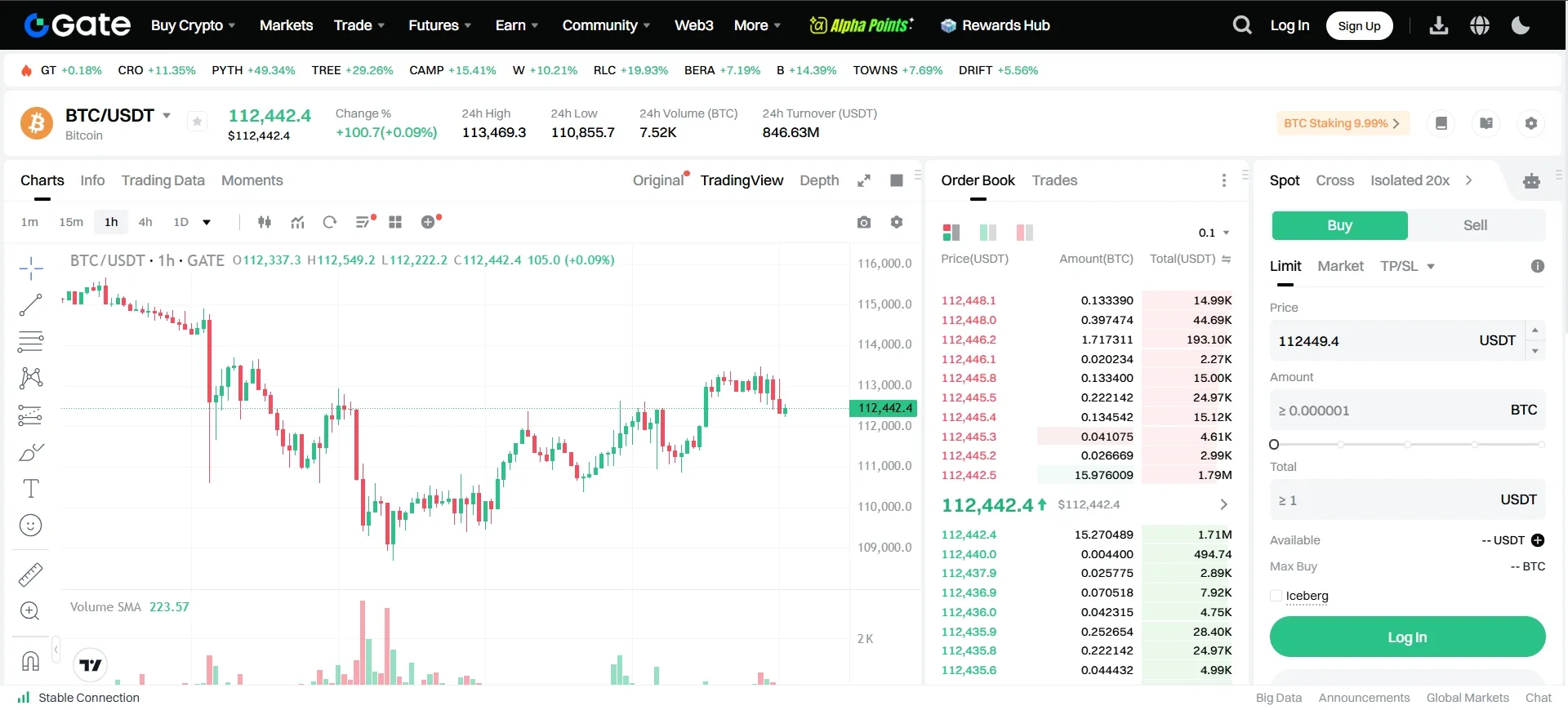
Gate.io charges 0.2% spot trading fees, slightly higher than Binance’s 0.1% but much lower than Coinbase. Futures trading fees are 0.015% maker / 0.05% taker, placing Gate.io in line with Bybit and KuCoin. Using GateToken (GT) can reduce costs further.
| Exchange | Spot Trading Fees | Futures Trading Fees | Supported Assets |
|---|---|---|---|
| Gate.io | 0.20% (discounts with GT) | 0.015% maker / 0.05% taker | 1,700+ coins |
| Binance | 0.10% | 0.02% maker / 0.04% taker | 600+ coins |
| Coinbase | 0.40%–0.60% | N/A | 200+ coins |
In short, Gate.io positions itself as a mid-cost but high-variety platform, ideal for altcoin hunters.
Gate.io Exchange Review: Key Features
Gate.io provides a broad suite of services:
- Spot and Futures Markets: Advanced trading with leverage and perpetual contracts.
- Altcoin Coverage: Over 1,700 cryptocurrencies, including rare low-cap tokens.
- Staking and Lending: Passive income opportunities with competitive returns.
- NFT Marketplace: Buy, sell, and mint NFTs on the platform.
- Copy Trading: Beginners can follow the strategies of experienced traders.
- GateChain: A proprietary blockchain for added security and interoperability.
- Mobile App: Full trading features on iOS and Android.
Moreover, Gate.io consistently updates its interface and adds new assets, keeping it competitive in an evolving market.
Gate.io Exchange Review: Pros and Cons
Pros
- One of the largest crypto listings in the world
- Advanced trading features and derivatives
- Strong liquidity in futures markets
- Passive income options via staking and lending
- Discounts with GateToken (GT)
Cons
- Not fully regulated in every jurisdiction
- Interface can overwhelm newcomers
- Customer support remains inconsistent
Step-by-Step Guide: How to Start on Gate.io
- First, create an account and complete verification if required.
- Next, deposit crypto or fiat via supported channels.
- After that, choose your market—spot for buying coins or futures for leverage.
- Then, explore copy trading, lending, or NFT marketplaces.
- Finally, secure profits by withdrawing to a private wallet.
As a result, users can scale their usage from basic trading to advanced strategies over time.
Gate.io Exchange Review: Security and Risks

Gate.io has avoided major hacks in recent years, thanks to cold storage, multi-signature wallets, and two-factor authentication. Its in-house blockchain, GateChain, adds another layer of security for asset protection.
However, risks remain. The lack of full regulatory clarity in certain regions means users must check compliance carefully. Additionally, as with any custodial exchange, funds are vulnerable if the platform is ever compromised. Therefore, serious investors often trade on Gate.io but store assets long-term on hardware wallets like Ledger.
Who Should and Shouldn’t Use Gate.io

Gate.io is particularly suitable for altcoin enthusiasts and professional traders who need access to a wide selection of assets and futures markets. Investors looking for staking or NFT services will also benefit from its integrated ecosystem.
On the other hand, complete beginners may find the interface complicated. Furthermore, those in heavily regulated jurisdictions should verify if Gate.io is legally supported in their region before committing funds.
Alternatives to Gate.io

Competitors include Binance, KuCoin, and Bybit. Binance excels in regulation and liquidity but lists fewer assets. KuCoin has similar altcoin coverage but slightly weaker futures markets. Bybit is strong in derivatives but lacks the wide ecosystem of Gate.io.
Consequently, Gate.io’s unique strength lies in balancing token diversity with competitive trading costs, making it stand out for those seeking breadth and flexibility.
Conclusion: Is Gate.io Still Worth It in 2025?

Ultimately, this Gate.io exchange review shows that the platform continues to thrive as one of the most comprehensive crypto trading ecosystems. While regulatory uncertainties may deter some users, its token coverage, competitive fees, and continuous product innovation keep it relevant. Therefore, for traders who value access to altcoins, futures, and passive income tools, Gate.io remains a worthwhile exchange in 2025.

