
Introduction: The Basics of Token Burning in Crypto
Token burning in crypto is a process where cryptocurrency projects deliberately remove coins from circulation. By sending tokens to an inaccessible “burn address,” those coins are permanently destroyed, tightening the supply.
For beginners, it might sound strange: why would a project destroy its own tokens? The logic is rooted in economics. Reducing supply can, under the right conditions, make the remaining tokens more valuable. At the same time, it signals to investors that the project is serious about long-term value.
This article unpacks why cryptocurrencies burn tokens, how the process works, examples from major projects, and what effects it really has on price and tokenomics.
How Token Burning Works
Credit from Cointelegraph
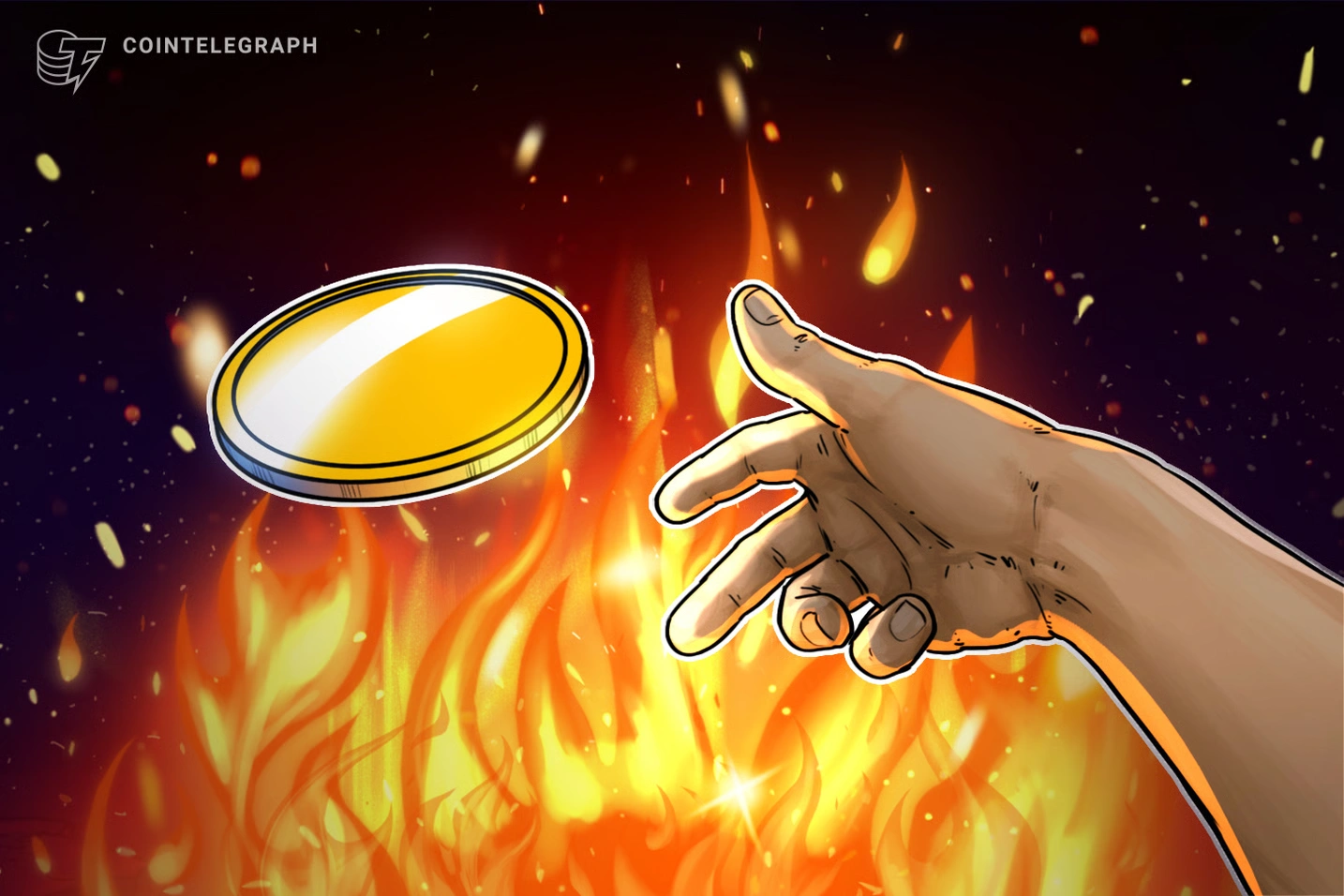
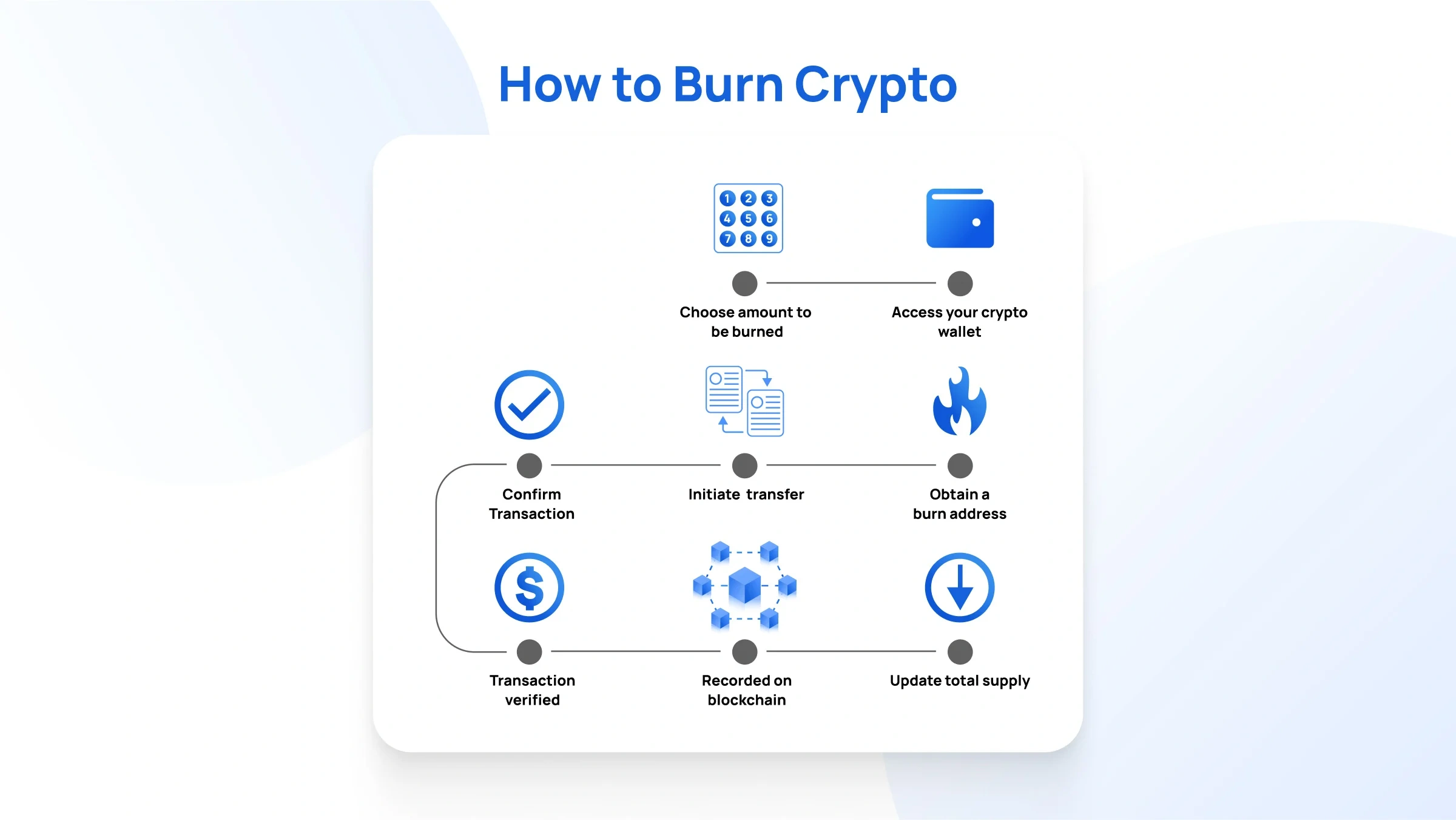
Burning tokens is usually a transparent, on-chain process:
- Selection of Tokens: The project team or community decides on how many tokens to destroy.
- Sending to a Burn Address: These tokens are transferred to a special wallet that nobody can access.
- Blockchain Verification: The burn is recorded permanently on-chain, so anyone can check.
- Updated Supply: The token’s circulating supply gets reduced, visible in explorers and metrics.
Some blockchains go further by automating burning: for instance, transaction fees can have a portion permanently removed, as seen with Ethereum after the EIP-1559 upgrade.
Why Do Cryptocurrencies Burn Tokens?
Credit from Transak
Different projects use burning for different reasons, but common motivations include:
- Reducing Supply: Just like a stock buyback in traditional finance, burning can make tokens scarcer.
- Inflation Control: For tokens that are continuously issued or mined, burns can offset inflation.
- Market Confidence: Regular burns can reassure investors that the project values scarcity.
- Utility Mechanism: In some systems, burning is tied to using services — for example, fees paid in tokens are burned, making use of the network reduce supply.
Token Burning and Deflationary Economics
Credit from INTRADAY.my
Cryptocurrency tokenomics often borrow from traditional supply-demand theory. If supply shrinks while demand stays constant, scarcity should push value up.
However, token burning is not a guaranteed “price pump.” Its impact depends on:
- Current demand and adoption
- Market sentiment at the time
- Overall crypto market conditions
- Transparency and frequency of burns
Projects like Binance have seen long-term benefits, but others that burn tokens without strong demand may see little to no impact on price.
Real-World Token Burn Examples
To understand burning in practice, here are three of the most notable cases:
Binance Coin (BNB)
Binance, the world’s largest exchange, performs quarterly burns of BNB. By January 2024, more than 47 million BNB had been burned since launch, representing about 23% of its total supply. This program is expected to continue until the circulating supply drops to 100 million BNB.
Ethereum (ETH)
Since the EIP-1559 upgrade in August 2021, part of every transaction fee on Ethereum is burned. By mid-2025, more than 4.3 million ETH (worth billions of dollars) had been permanently destroyed. This mechanism has sometimes made Ethereum deflationary, depending on network activity.
Shiba Inu (SHIB)
The SHIB community initiated ongoing burns to shrink its enormous supply of nearly 1 quadrillion tokens. Community-led efforts and partnerships with burn portals have destroyed tens of billions of SHIB, though its supply still remains massive compared to demand.
Table: Token Burning Examples in Practice
| Cryptocurrency | Burning Mechanism | Total Burned (Approx.) | Purpose/Impact |
|---|---|---|---|
| Binance Coin (BNB) | Quarterly burns by Binance | 47M+ BNB (as of 2024) | Reduce supply to 100M, increase scarcity |
| Ethereum (ETH) | Fee burn via EIP-1559 | 4.3M+ ETH (as of 2025) | Fee deflation, balancing issuance |
| Shiba Inu (SHIB) | Community & burn portals | 50B+ SHIB (various) | Reduce huge supply, support scarcity |
(Sources: Binance announcements, ultrasound.money, Shiba Inu burn portal stats)
Benefits and Limitations of Token Burning
Benefits
- Creates scarcity, potentially increasing long-term value
- Provides an inflation-control mechanism
- Signals project commitment to investors
- Can be integrated into network utility (e.g., fee burns)
Limitations
- No guaranteed effect on price without strong demand
- Overemphasis on burns can distract from real utility
- Frequent burns may be seen as artificial manipulation
- Transparency is key — undisclosed burns can damage trust
Token Burning vs. Other Supply Management Methods
While token burning is popular, it is not the only way projects manage supply. Others include:
- Staking Rewards Adjustments: Instead of burning, tokens are locked to reduce effective supply.
- Token Buybacks (without burning): Projects purchase tokens to stabilize prices, but tokens remain in circulation.
- Halving Events: Like Bitcoin, mining rewards are periodically cut, naturally limiting issuance.
Compared with these, burning is permanent and irreversible, making it one of the strongest supply-reduction tools.
Investor Considerations
For new investors, it’s tempting to see token burning as a simple price booster. But history shows it is more complex.
- BNB burns worked well largely because Binance maintained high demand for BNB through trading fee discounts and ecosystem integration.
- ETH burns gained importance because Ethereum remains the dominant smart contract platform with heavy usage.
- SHIB burns, however, have had limited price impact because demand and utility are weaker relative to supply size.
Thus, the effectiveness of burning depends on demand-side strength more than just how many tokens are destroyed.
Conclusion
Token burning in crypto is more than a flashy headline — it is a supply management strategy that can shape tokenomics over the long term. By removing tokens permanently, projects aim to reduce inflation, create scarcity, and signal commitment to their communities.
But beginners should remember: while token burning in crypto can influence prices, its real impact depends heavily on utility, adoption, and market demand. Understanding the context behind a burn is as important as knowing the numbers.
